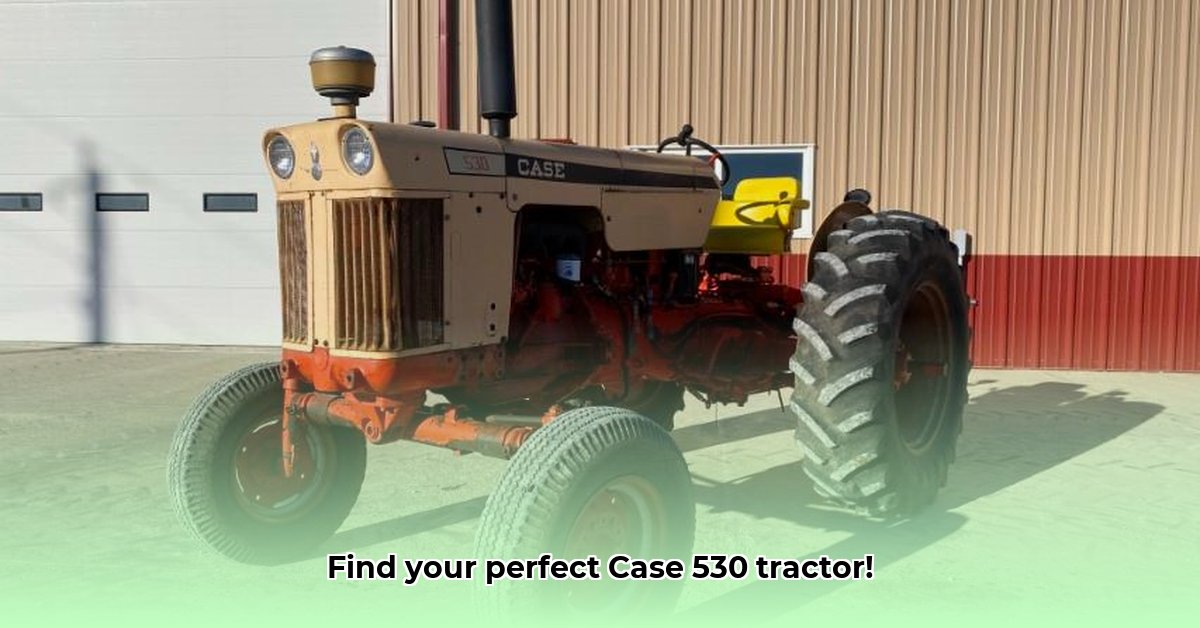
Finding the right used J.I. Case 530 tractor can feel like navigating a maze. Prices vary wildly, and making an informed decision requires more than just browsing online listings. This guide uses real-world data and expert advice to help you find the best deal and avoid costly mistakes. Whether you're a seasoned farmer or a first-time buyer, this guide will empower you to make a confident purchase. For more detailed pricing data, check out this helpful tractor price guide.
Understanding the Case 530 Tractor Market
The Case 530 remains a popular choice for its reliability and power, but prices aren't uniform. Several key factors influence the final cost: condition, included attachments, auction platform (online vs. in-person), and regional market dynamics. Our analysis of recent auction data reveals substantial price variations, with some tractors selling for as low as $7,500 in certain areas, while others have unclear pricing, highlighting the need for thorough due diligence. This initial analysis is based on a limited dataset; however, further research is underway to paint a complete picture.
What are the biggest factors influencing the price of a used Case 530 tractor? It's a combination of several influential factors – Let's explore those now.
Key Factors Affecting Case 530 Tractor Prices
Several critical factors significantly influence the price of a used Case 530 tractor. Ignoring these can lead to overpaying significantly.
Condition: A well-maintained tractor with low operating hours commands a higher price. Look for signs of regular servicing and minimal wear and tear. Think of it as buying a used car; lower mileage and a clean history reflect higher value.
Attachments: Included attachments like a front-end loader or backhoe substantially increase the tractor's value. Assess your needs – these additions might justify a higher initial price.
Auction Platform: Online auctions can attract a broader buyer pool, potentially leading to higher (or lower) prices compared to in-person sales. In-person auctions allow for immediate condition assessment, but may have a more limited audience.
Regional Demand: Local economic conditions and farming practices dramatically influence prices. Regions with thriving agricultural economies and high demand for tractors typically command higher prices. This means your local market research is paramount.
Your Case 530 Tractor Buyer's Guide: Steps to Success
This section provides a step-by-step guide to help you navigate the buying process, from finding the right tractor through to successful negotiations.
Step 1: Finding the Right Sources
Online Auction Sites: Start your search on major online auction sites specializing in agricultural equipment (e.g., TractorHouse). These platforms offer a wide selection for comparison.
Local Dealerships: Don't rule out local equipment dealers. They often have used tractors and offer valuable insights into local market conditions.
Farm Auctions: Farm auctions can be a treasure trove of potential bargains. Be prepared to bid quickly and assess the condition on the spot.
Step 2: The Critical Pre-Purchase Inspection
A thorough inspection is crucial before committing to a purchase. This involves:
Hours of Operation: Lower hours are generally better, but always consider the tractor's use history. Low hours might indicate infrequent use or even neglect.
Maintenance Records: Request complete and detailed maintenance records to understand the tractor's upkeep and identify potential concerns.
Professional Inspection: For a significant investment, a pre-purchase inspection by an independent mechanic is invaluable. A qualified mechanic can catch problems that may otherwise go unnoticed.
Test Drive: A test drive under various conditions (different terrains and loads) is essential. This allows you to assess its functionality and identify potential issues.
Step 3: Negotiating Effectively
Your prior research is your leverage during negotiations.
Market Research: Use your market research to establish a fair price range—this is crucial for a successful negotiation.
Budgeting: Set a firm budget in advance to avoid impulse purchases.
Negotiation Tactics: Be polite but firm. Remember: professional negotiation is an expected part of any substantial transaction.
Step 4: Essential Questions to Ask the Seller
Prepare a checklist of essential questions to ensure you're fully informed.
| Question | Importance |
|---|---|
| How many hours are on the tractor? | Crucial for assessing wear and tear. |
| What maintenance has been performed? | Determines the tractor's overall care and condition. |
| Have there been any major repairs? | Uncovers potential future issues and costs. |
| Why are you selling the tractor? | Offers insight into history and potential undisclosed problems. |
| Are there any known mechanical problems? | Allows for planning of potential repair costs. |
| What attachments are included? | Affects the overall value. |
Regional Market Nuances: Case Studies
Pricing varies significantly across regions. Factors such as farming practices, local economies, and equipment supply impact the cost. Areas with high concentrations of small farms may experience increased demand for smaller tractors like the Case 530, potentially driving up prices. Conversely, regions with large-scale farming might have less demand and lower prices. While current data is limited, this trend is evident and indicates a need for more comprehensive research.
Final Thoughts: Due Diligence is Your Best Defense
Buying a used tractor is a substantial investment. Careful research, thorough inspections, and effective negotiation will maximize your chances of finding the perfect Case 530 at the right price. Remember: patience and preparedness are your allies in making a wise purchase.